
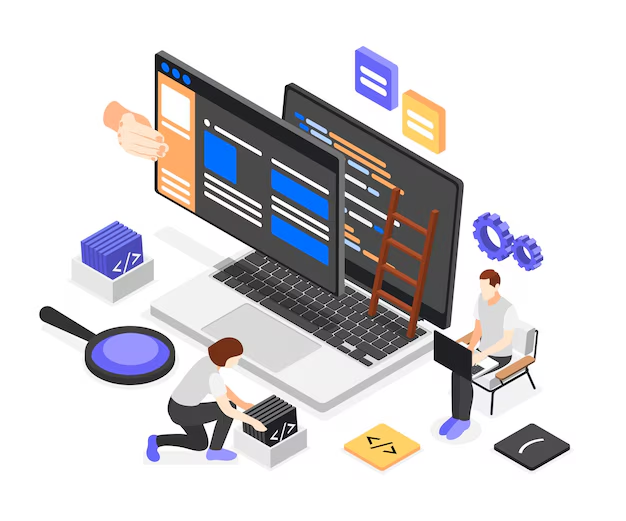
WEB DESIGN
Web design is simply the process of creating and then maintaining the visual and functional elements of a website. It therefore encompasses art and technology through the application of design principles, coding languages, as well as best practices that govern user experience. Here is a breakdown of how it happens:
Key Elements of Web Design
Layout Design
How content is arranged on a webpage or website, including text and images.
Tools: Wireframing tools like Figma, Adobe XD, or Sketch help sketch layouts.
Designing for responsiveness in a manner that the websites look and work well both on desktops, tablets, and smartphones.
Visual Design
Color schemes, typography, and imagery
Design must have aesthetics that complement the brand identity Modern trends: minimalism, gradients, and animations
User Experience (UX)
The way users use and experience the site
Intuitive navigation
Fast loading time
Clearly stated calls to action.
Tools like UsabilityHub or Hotjar help test UX.
User Interface (UI)
Details the interactivity and usability of elements like buttons, sliders, forms, etc.
Balances aesthetics with functionality.
Web Design Tools and Skills
Graphic Design Tools:
* Adobe Photoshop, Illustrator, Canva for creating visuals.
Frontend Coding Skills:
* HTML (structure), CSS (styling), and JavaScript (interactivity).
Modern frameworks: Bootstrap, Tailwind CSS, or React.
Content Management Systems (CMS):
* Platforms like WordPress, Joomla, or Wix for non-technical web design.
Version Control:
Tools such as Git to manage and track changes in the codebase.
Typical Web Design Workflow
Requirement Gathering
Understand client needs, target audience, and project goals.
Planning
Create a sitemap and wireframes.
Design
Build mockups and prototypes.
Development
Convert designs into a functional website using code.
Testing
Check for bugs, performance, and compatibility across browsers and devices.
Launch and Maintenance
Deploy the website and ensure regular updates and fixes.
Career Opportunities in Web Design
Web Designer: Specializes in layout and visual aspects.
UI/UX Designer: Improves user experience.
Frontend Developer: Produces code for the frontend web design.
Web Animator: Adds dynamic elements through animation.
Want to know more about the tools, learning paths, and career development in web design?